Entertain, don't sell.
How brands can make memes without being cringe. Nice try diddy.

I recently gave a talk at MAD//Fest about how to make memes without being cringe. A few people have asked to see the presentation and I thought, finally, what a great excuse to stop posting on LinkedIn and start a Substack.
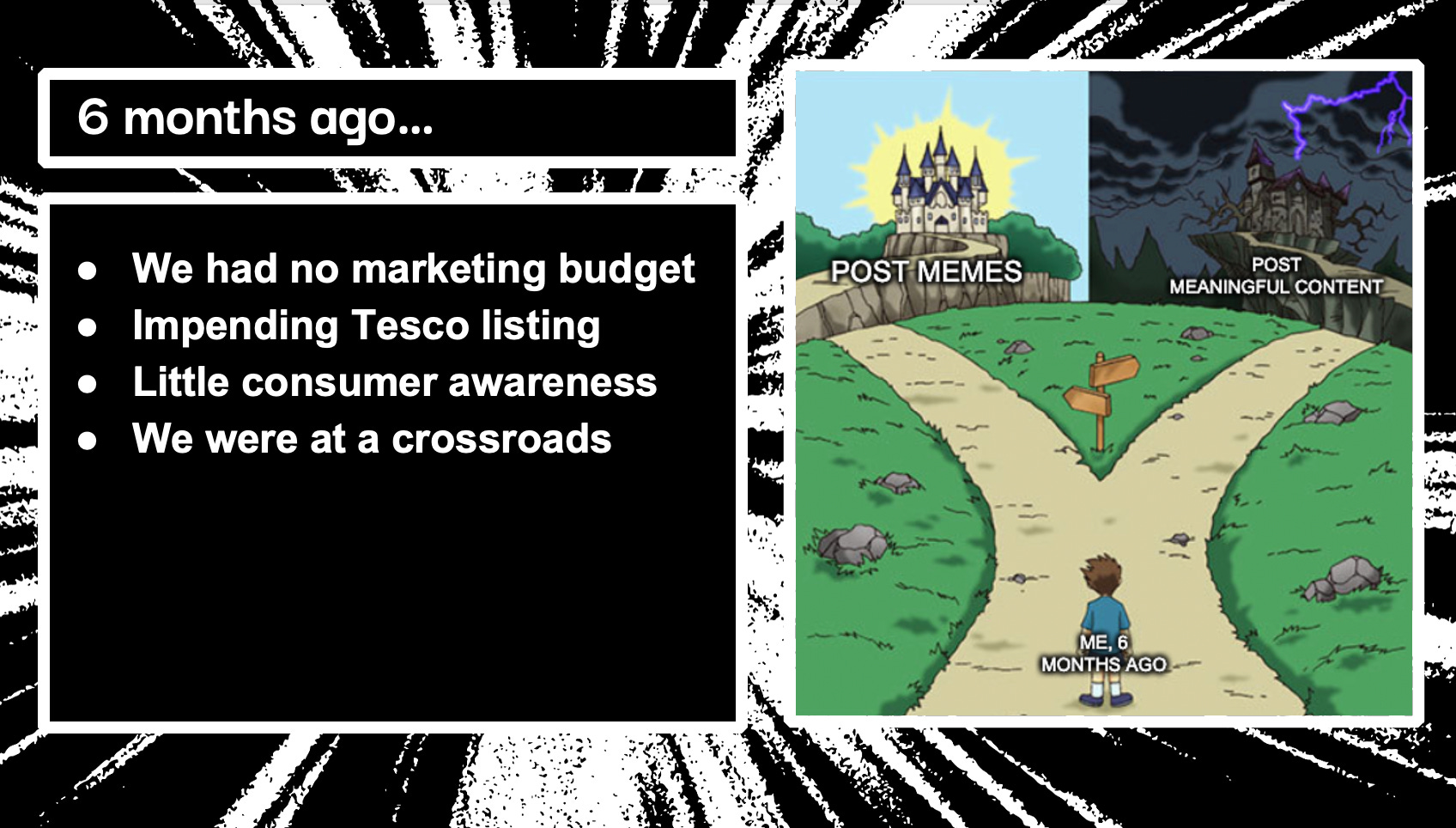
6 months ago we were told that Tesco would be launching our new product in May. We had 8,000 followers on the Solo Coffee Instagram and generally very little consumer awareness. The problem is, we had no money and no real plan to ensure that people would know us, let alone buy our new product in Tesco.
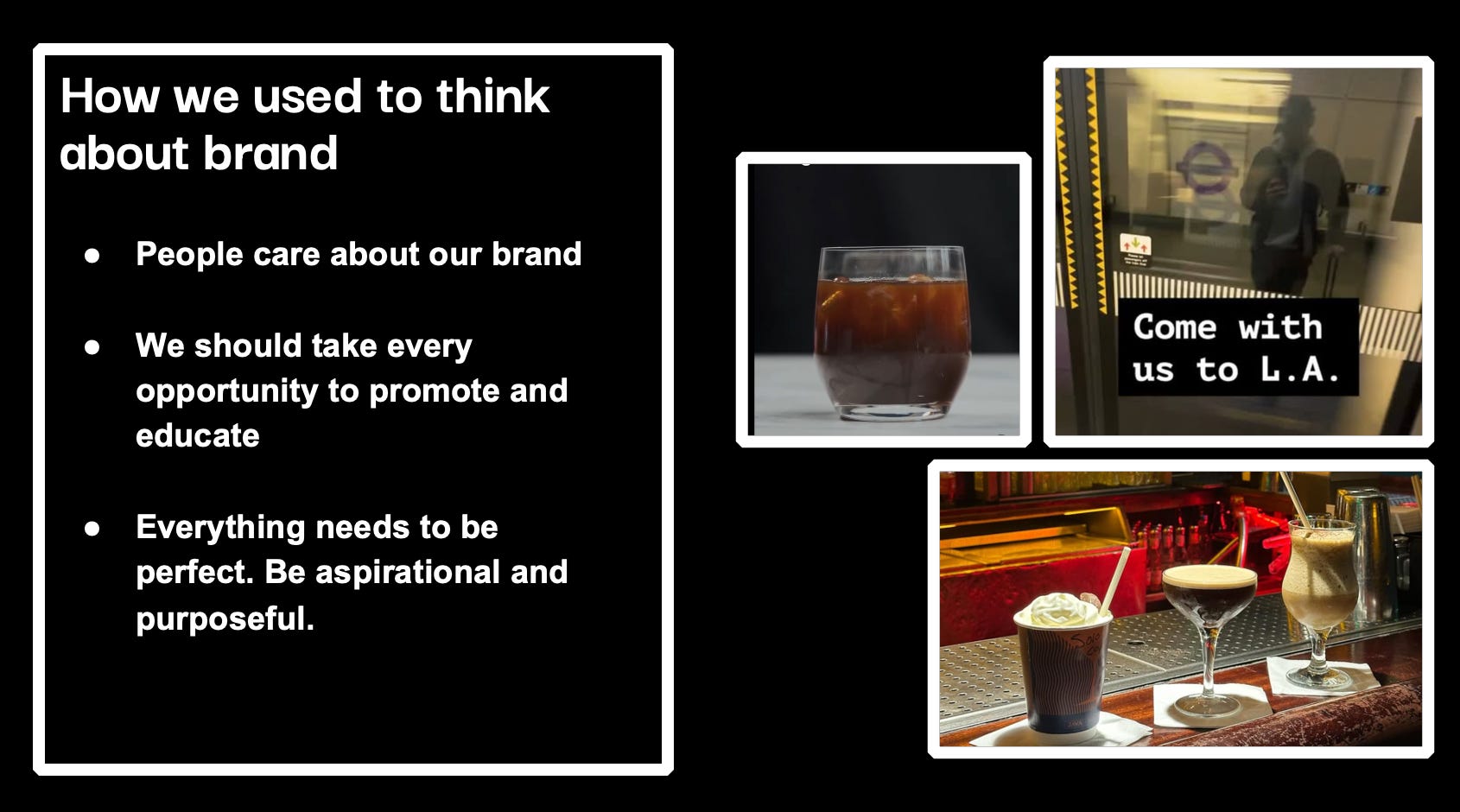
Before, we were following the typical F&B content playbook. Educate, promote, piss away money in the pursuit of looking professional. Create high quality how-to videos, show off new business wins, brag about trips to LA.
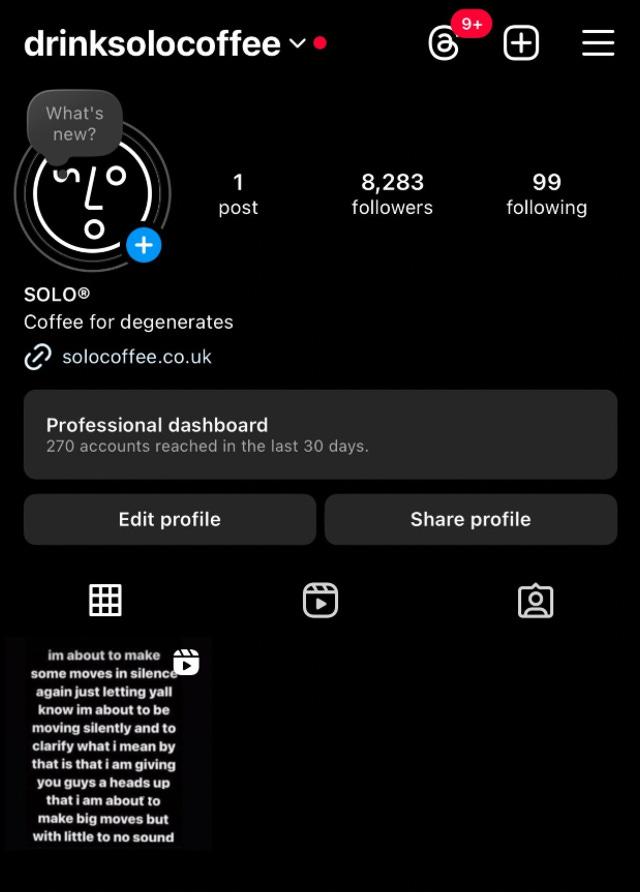
So, we deleted everything and tried something new. We left one well known meme in place of 5 years of overpriced, ignored content. This is what our insta profile now looked like.
.
New strategy (theory)
We needed to create a large audience of people that drink an irresponsible amount of coffee. If we could create a community of people that view coffee the same way as us, chances are, they would take interest in a product like ours. The community we needed was people who view coffee as the black nectar of enlightenment.
We created a very specific pen portrait. Dan, a 36 year old man who works in a creative industry who used to party too hard but has decided to mellow down a bit but still looks forward to the one vice and high in his life - coffee. He goes on social media for light entertainment and to have a laugh, and crucially, not to buy things. He’s basically me in a few years, and chances are, most brand owners are going to be speaking to people much like themselves. This makes things much easier because your task becomes answering the questions, “what do I genuinely find entertaining? What makes me laugh?”. This side-steps the dreaded trap that most CMOs and founders fall into: “what is expected from a brand like mine”.
New strategy (practice)
Entertain. Don’t sell. We had one goal, and that was to entertain Dan. If we did that right, the rest would follow. It’s hard to come to terms with, but selling has a hidden cost. Put it to the side for now.
Post one meme, every single day. This might have been overkill, but I posted a meme every day. The result was 60 million views in 6 months. Frequency is everything with this. Not only for the obvious compounding effect, but because when you are forced to produce every day, magic happens. You become internet literate, you learn what works, you stop getting scared of putting things out there, you become scrappy and unexpected which is very much the theme of social media.
Don’t start the conversation. Join it. Social media is the world’s largest party where people are already having great conversation and laughing hysterically. Brands attempt to interrupt this fun with an unsolicited advert. They are showing up to a party in a suit and handing out flyers. Nobody wants them there and will avoid them at all costs. You need to genuinely join the conversation and add value to it if you want to be heard. It doesn’t matter how good the flyer is. You need to read the room.
Memes are part of the ongoing commentary on the zeitgeist. The more relevant they are to the moment, the harder they hit.
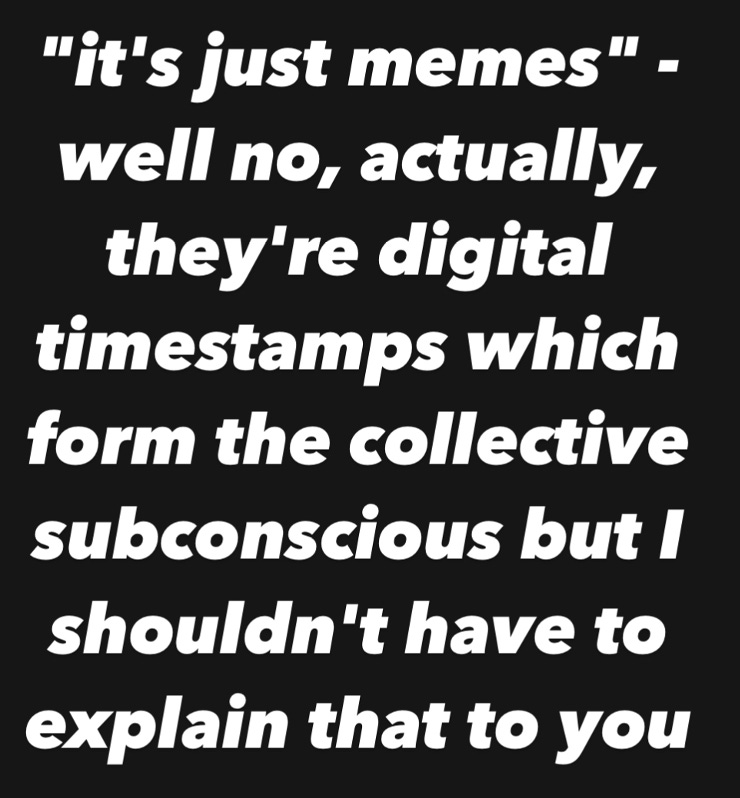
How most brands make memes:
They force the brand into the joke, even if it kills the joke.
They play it far too safe.
They make it for their current following (the bottom-of-funnel).
The memes they use are outdated, and too clean.
They outsource it to somebody who doesn’t truly know what the brand stands for.
Following those rules, this is an example of a bad meme:
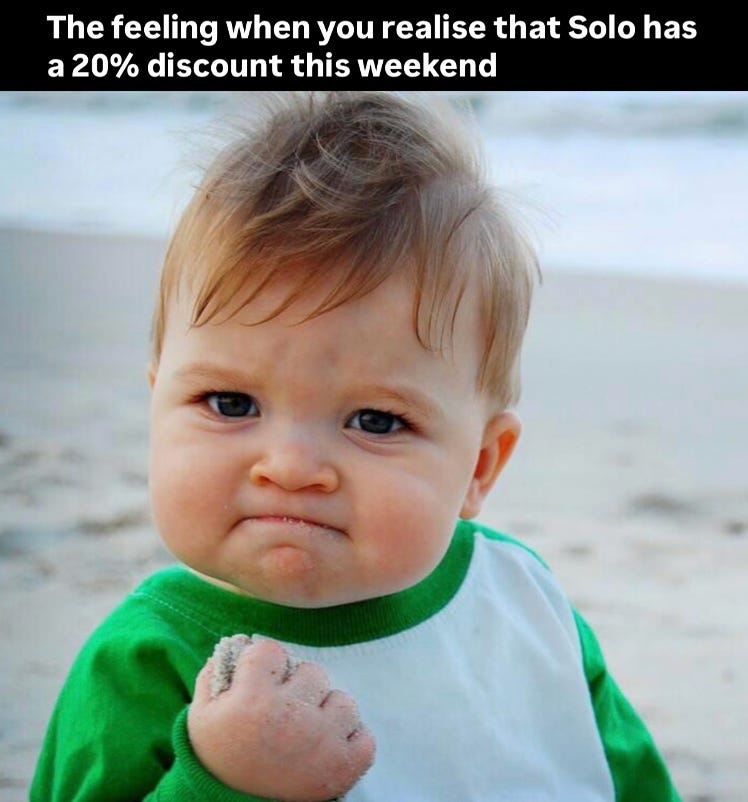
How brands should make memes
Ask yourself these very important questions:
“Is this genuinely a standalone funny joke?”
“Will strangers who don’t know the brand want to share this?”
“Does this feel like a brand came up with it?” (it shouldn’t).
The idea here is to make content with the goal of reaching new people (the top-of-funnel). If it ticks all the above boxes, it has the potential to go viral.
Some signs that you’ve achieved the above.
People will post it on their story (this is my quickest signal that I’ve done a good job).
Strangers comment “this is so me”.
The views break out of your following and starts to grow exponentially.
Here is an a example of a meme that has worked for me:
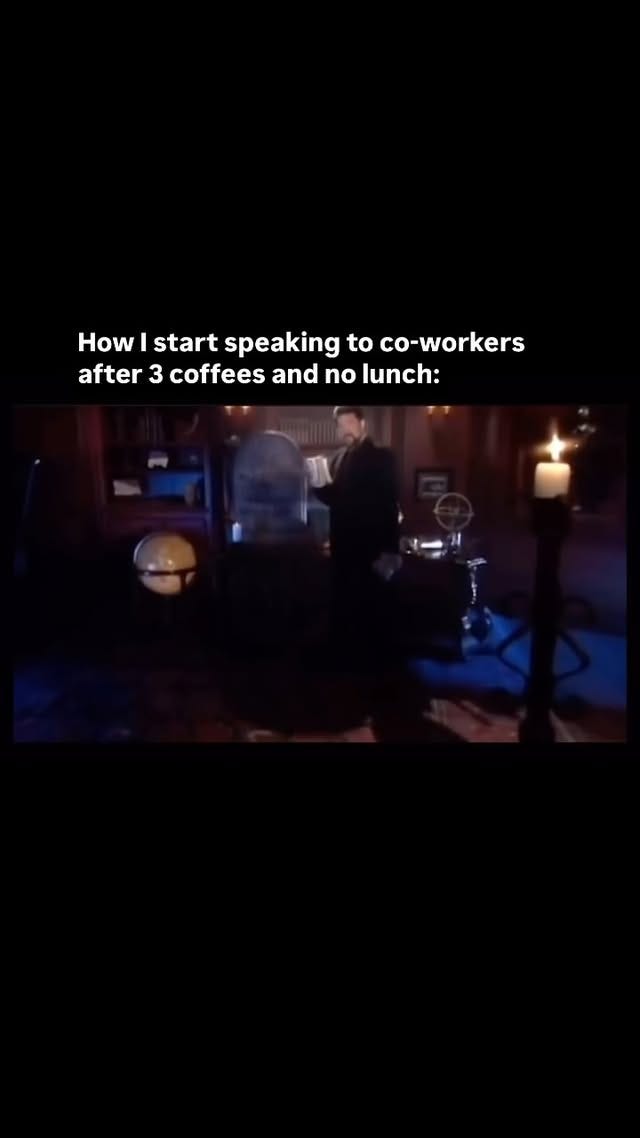
11.2 million views, 740k likes. It is relatable, shareable, and a standalone funny video. It doesn’t force Solo down people’s throats, but it reinforces our values and brought in 3,000 followers.
They say a joke is ruined when you have to explain it so I’m not going to give more examples but if you want to see more, look at @drinksolocoffee on instagram and look for the ones that have done over 1m views. You’ll see patterns and obvious reasoning for why they did well. If you can’t find obvious reasoning for why a post will do well, then it probably won’t do well.
That being said, some videos I thought would do well flopped, and vice versa. You won’t really ever know or be in control of whether they’ll do well. That’s why you have to persevere and post frequently, as soon as you worry that a post needs to be perfect, you’ll procrastinate and won’t learn anything. Social media is temporary and short term, aim to win the moment again and again.
How do memes actually help a brand?
Compounding effect
When you start speaking to a larger audience than your current following, word spreads. Creating something that people want to share is the aim. As I said, when I see that someone has shared a meme to their story I know it’s game over. At least one person in their audience will share the post, and so on…
Followers
If you continually put out entertaining content, inevitably you will get new followers. Followers are not the be-all and end-all like they used to be, but they do grow your initial audience platform. And needless to say, credibility.
Relatability
Most brand owners are sharing very different content to their friends than they are posting on behalf their brands. When this gap closes, and you start posting things you would share with your friends, your brand becomes genuinely relatable. It also becomes a lot more enjoyable to create content.
Curiosity
Memes aren’t directly promotional to your product or service necessarily. But they can represent your brand. If this is done well, people who like the content will naturally be curious to find out what it is that you do. It is a natural, unforced funnel.
Sales
Millions of views, leads to hundreds of thousands of profile visits, which leads to thousands of link clicks, and eventually sales. The numbers do eventually work. Outside of DTC, I have strong reason to believe that our memes have led to many more sales in retail and general consumer awareness.
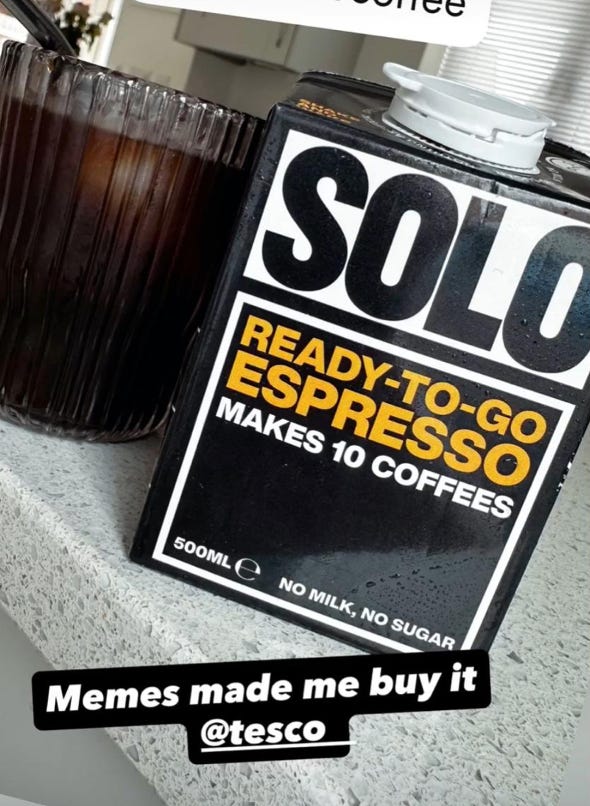
Collaboration
When you can successfully speak to the most cynical of all audiences, brands and target accounts will be drawn to you. It is a superpower that can be leveraged.
Celebrity status
I hear lots of founders cursing about celebrity led brands and how they have an unfair advantage. But truthfully, you can create a similar celebrity status yourself without having to be like Steven Bartlett. We haven’t reached this kind of fame but I think Millennials and older generations hugely overlook the importance of meme accounts and the role they play in culture. Many meme accounts have spawned multimillion pound businesses.
Lower expectations
When you start to act more human, people will treat you more like a human. When you present more polished, the natural response is for people to find holes.
Pastels and purpose is out. Chaos and comedy is in.